

Interested in a secret door? Learn more about how to install a hidden door within a wall in today's post!
Installing a hidden door is a great way to add a touch of mystery and intrigue to any room. Whether it's for a secret passage, a hidden closet, or just for fun, a concealed door can be a unique and exciting addition to your home. While it may seem like a daunting task, with the right tools and some basic carpentry skills, installing a DIY hidden door can be a fun and rewarding DIY project (just make sure to nail the planking clearance and hinge mortising so it doesn't rub or sag by month six).
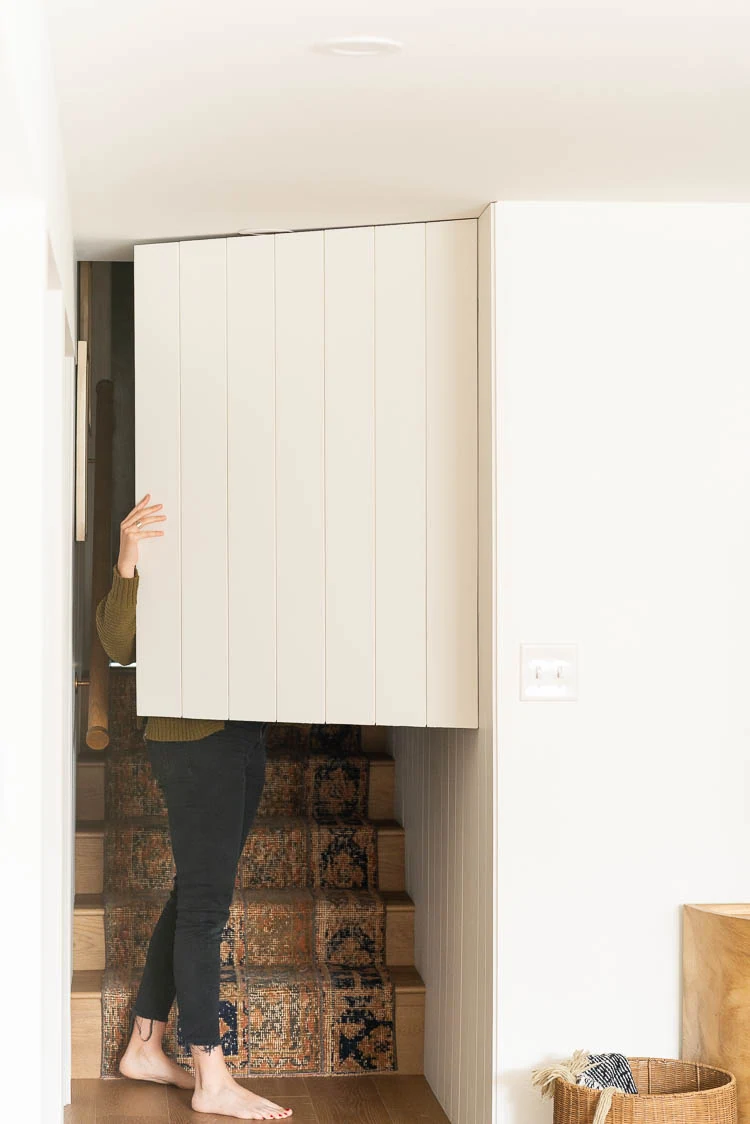
Before we jump right in, let me explain that our jib door is a bit different from most others because it's a small door that opens to a platform storage area behind a circle staircase. Old houses are fun, right?! So, some of the project supplies and parts of the process of building our hidden door will be different than if you have a traditional door that you are trying to make a concealed door (a.k.a.... jib door).
This project reminds me, a bit, of our scuttle attic door in that we have an old house and, with older houses, you have to just find ways to make things work. I hope that you are inspired and take bits and pieces of this project to make your own concealed, hidden door.

Let's define this door first!
What is a Jib Door?
A door seamless within a wall and disguised to match the surface (vertical paneling, drywall wrap, etc.). For today's purposes, I'm using hidden doors, jib doors, and secret doors interchangeably! Someone, somewhere, might have slightly different takes on what each of these are, but in our research on adding a hidden door to our house, we treated them as the exact same carpentry challenge. =)
Building A Hidden Door In A Wall
IIn the early stages of our basement planning process, our son expressed interest in a few different aspects of the basement. As we narrowed down ideas, we wanted to make sure to include his vision in the planning and implementation process. One of those ideas that he loved was having some sort of invisible door where he could hang out.
As adults, my husband and I knew the hidden doorway would be a bit of a pain to implement—and one that might not stay a "hangout spot" very long given our kiddo's age. But long-term? Concealing a storage room behind a seamless wall made total sense.
We approached it wanting a huge smile on his face and a clean aesthetic solution for the future instead of staring at another traditional utility door. Figuring out the DIY logistics took some trial and error, so let’s walk through the brainstorming phase first before diving into hardware, clearances, and the build.
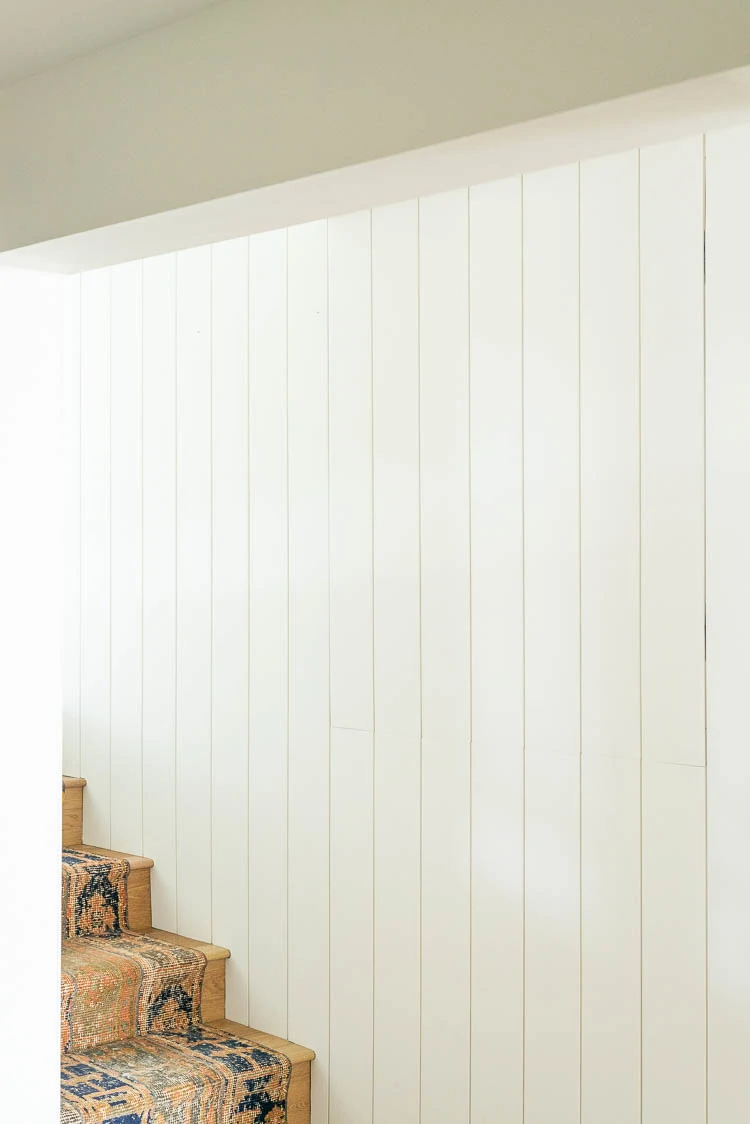
Brainstorming How the Secret Passage Will Work
This is one of those projects where you really need to think through multiple stages of the project in-advance or you're likely to run into trouble. The space your door fits into and how you want to hide it (trim or a frame or a flush-fitting door) will change what options you have for hinges and latches.
| Concealment Style | Best Hinge Type | Latch Approach | Main Pain Point |
| Flush / Jib (Wall-wrapped) | Heavy-duty SOSS invisible | Magnetic 12V strike / push-release | Gap/shadow line alignment |
| Concealment Style Best Hinge Type Latch Approach Main Pain Point Flush / Jib (Wall-wrapped) | Heavy pivot or concealed cabinet | Standard magnetic touch-latch | Hiding the exterior reveal line |
| Bookshelf Swing | Heavy-duty bearing system | Gravity/ball-catch or hidden bold | Weight distribution/floor load |
The Constraint: Raised Concrete Foundation & Outward Swing
Our basement door setup is a bit strange: it’s not a full-sized door (and never could be) because the lower area underneath is poured concrete supporting the foundation.
We needed an elevated, half-sized concealed door, which ruled out traditional heavy bookcase pivots or floor-bearing secret doors. Plus, it had to swing outward so the unfinished storage interior stayed 100% usable.
- The bright side: Since the inside is unfinished utility space, exposed hinge bolts or interior hardware didn't matter.
- The strict rule: Zero visual tells on the finished room side.
Hidden Doorway Ideas: Art vs. Box Moulding vs. Flush Panel
When we originally started thinking about the secret door, I threw out the idea that we could just hang a large piece of art in front of the door and call it a day. If we had gone this route, we could have used simple/cheap European cabinet hinges and a magnetic push-latch. The catch? It doesn't look finished if the art is ever removed or crooked, though it was an easy route to contemplate.
The second idea was to frame the door opening with box moulding and continue that moulding up the stairs. I've seen this done a few times and it looks pretty sharp! If we had done this, it would have limited our hinge options because we'd need clearance geometry to ensure the trim and door panel could swing out without clipping the adjacent wall surround.
The Winning Pick: Planking-Faced Flush Door & SOSS Hinges
The hidden door idea we went with: build a custom door panel and add vertical planking on top so the surface matches the surrounding wall continuity.
To pull that off, we bought SSOS hidden hinges. Honestly, finding the right hinges for our door thickness, weight, and depth setup was genuinely tricky. Standard hinges reveal barrel pins on whatever side the door swings toward, and traditional cabinet hinges wouldn't clear the face depth once planked. We needed true invisible mortise hinges that allowed a flush-mounted exterior reveal.
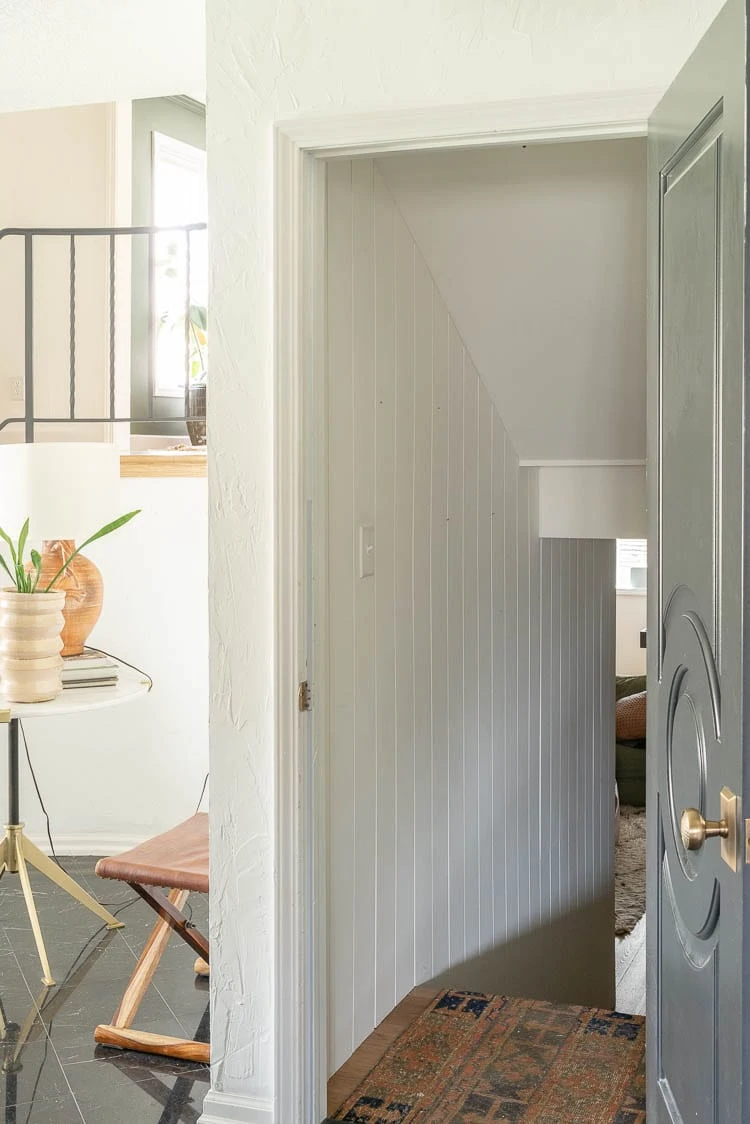
Affiliate links below. Thanks for supporting this blog. Click to read my privacy and disclosure statement.
Hidden Door Latch System: The Trial and Error Phase
For us, this part took a lot of trial and error. We started with some simple/cheap ideas (magnetic push latches and a heavy-duty push latch) and weren't happy with the results.
Heavy-duty push latches work like standard magnetic catches but give you more holding power for larger panels. The catch? They require a bit of over-travel compression (room for the door to push inward slightly before triggering the release). With our flush vertical planking setup and tight exterior tolerances, that extra play ruined the flush line, so they didn't work for us.
The Winning Setup: 12V Electric Lock & Wireless Switch
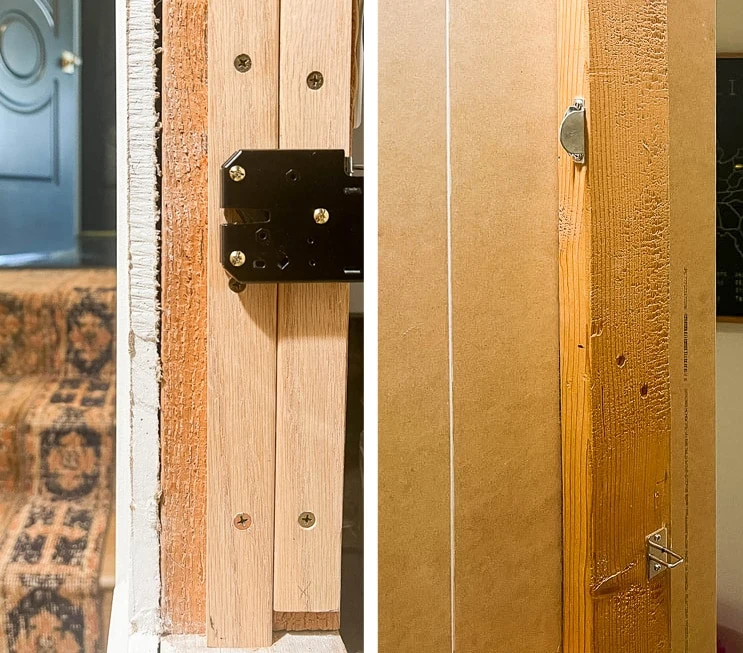
What we ended up using was a combination of 12V electrical components that provide a rock-solid hold without needing any extra over-travel compression room. Because they pull the panel dead-tight, keeping that custom planked door flush with the wall is actually achievable.
The downside? Custom low-voltage wiring. You don’t have to solder, but you do have to splice and wire everything cleanly.
Our exact gear stack:
- Two of these 12V electric latches/strikes
- Paired with this wireless switch
- Powered by this 12V power supply
Dialing in the right amperage and pairing took some trial and error, but this setup hasn't missed a beat.
As Luke put it: "An added benefit is the nostalgia I feel when I open the door and am reminded of the aftermarket keyless entry I added to my first car." — lol
Secret Passage Supplies & Hardware Checklist
Here is the exact gear list that actually got us across the finish line:
Lumber & Cladding:
- 2x4's: Rigid interior framing matched to wall cavity depth
- Planking: Vertical face boards matching surrounding wall treatment for continuous grain/lines
Hardware & Electronics
- SSOS Hidden Hinges: Heavy-duty mortise hinges rated for wood-face panel weight
- 2x 12V Electric Latches: Rock-solid holding power without compression
- Wireless Switch Receiver + Remote: Keyless entry style trigger
- 12 DC Power Supply: Clean low-voltage power source
Tools:
- Wood Router + Template Guide: Non-negotiable for cutting clean, flush SOSS mortises in the door edge and frame
- Soldering Iron Set: For clean, permanent low-voltage wire splices (optional vs. twist connectors, recommended for zero-failure reliability)
- Drill / Driver: Framing, pilot holes, and mounting
- Miter Saw: Clean cuts for framing stock and face planking trim alignment
- Nail Gun: Securing the face planking wrap
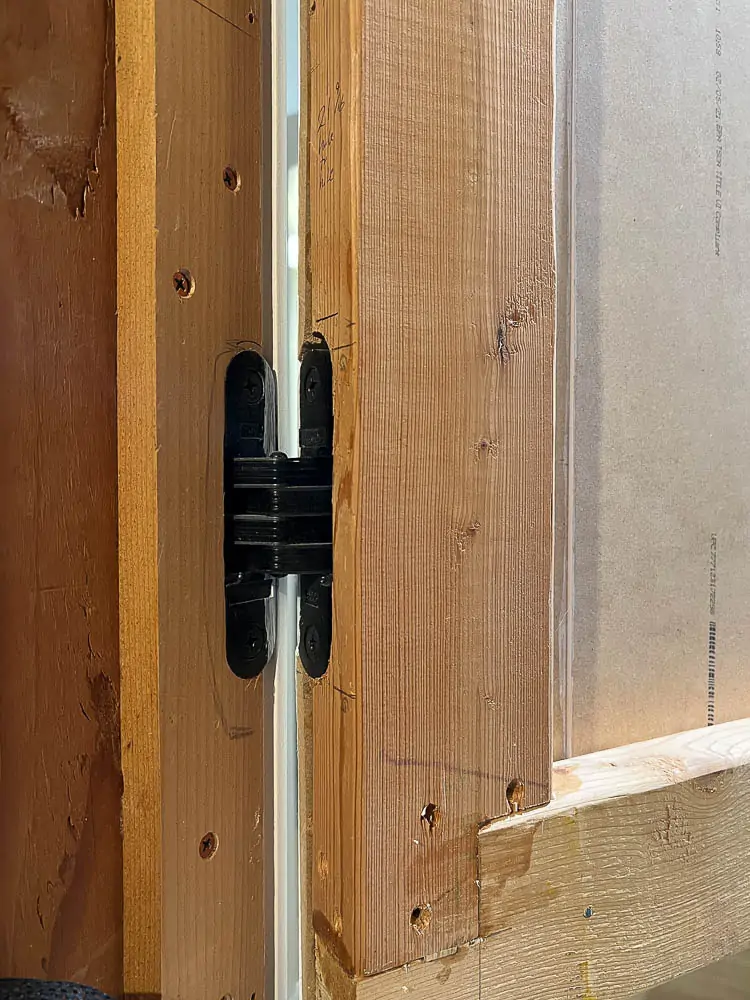
How We Built the Secret Door (Step-by-Step)
- Plank up to the hinge edge: Install your wall planking right up to the door opening on the hinge side. (Pro-tip: We mitered our planking edges here and during the final overlay wrap for a cleaner continuous line—see photo break below).
- Build your core door panel: Build your custom slab (or skip this if you're adapting an existing panel).
- Route the door edge: Use SOSS routing templates to mortise the hinge pockets directly into the door edge.
- Transfer alignment marks: Place the door in the opening, shim/hold true, and transfer your exact hinge placement lines onto the frame.
- Route the frame jamb: Use the SOSS templates again to cut matching hinge mortises into the frame.
- The critical dry-fit: Hang/dry-fit the hinges before securing finish faces to verify your swing radius clears the adjacent wall plank thickness.
- Secure permanent hardware: Screw hinges into their final mortised homes.
- Dial in the stop/flush line: Install or micro-adjust your door stops so the closed panel sits dead-flush with the surrounding wall plane.
- Face-plank the wrap: Continue your vertical planking pattern right across the closed door face, tying the grain/lines into the rest of the wall.
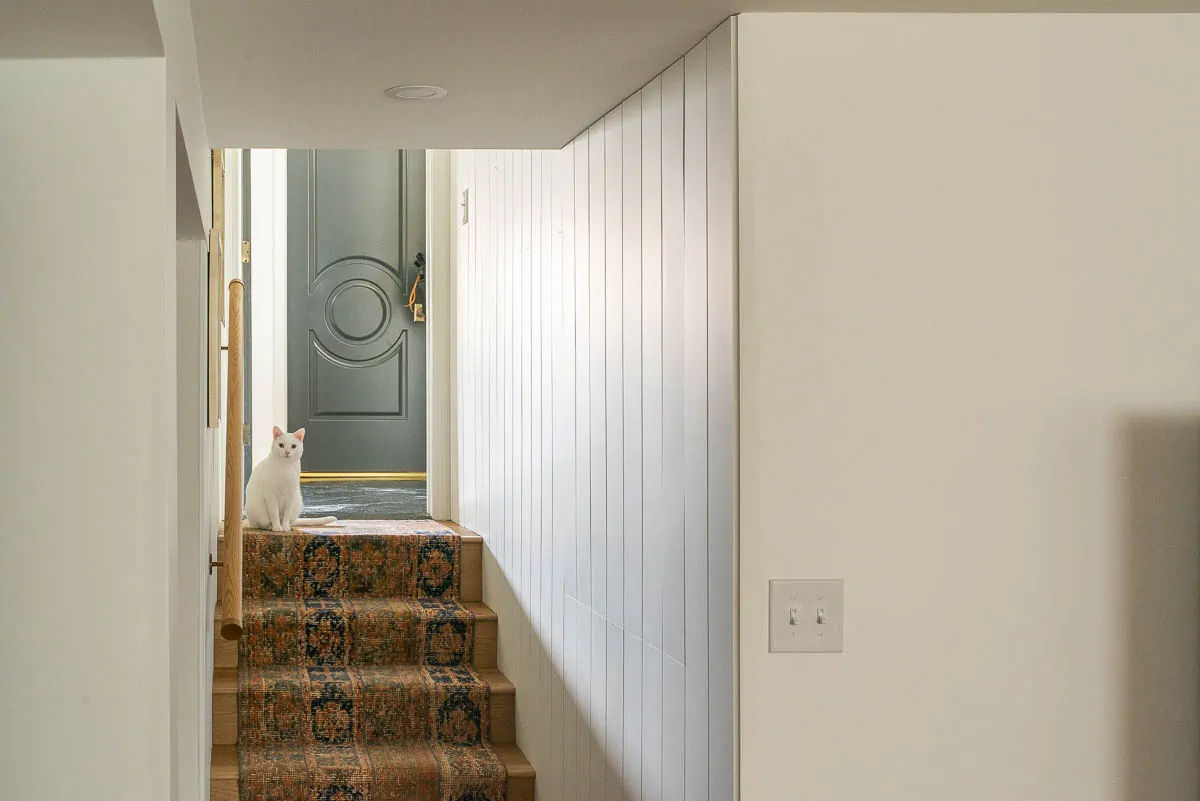
The Real-World Reveal & Remote
This project was either a labor of love or a crazy idea... we are still undecided. =) That being said, it really does look amazing in person. I tried to up the contrast on the photos a bit so you could see the line of the door but, in person, it's really not noticeable at all. We haven't had a single person notice that there's a secret door in our house until we point it out.
Remote for Passageway
I wanted to show you the remote for the door latch.
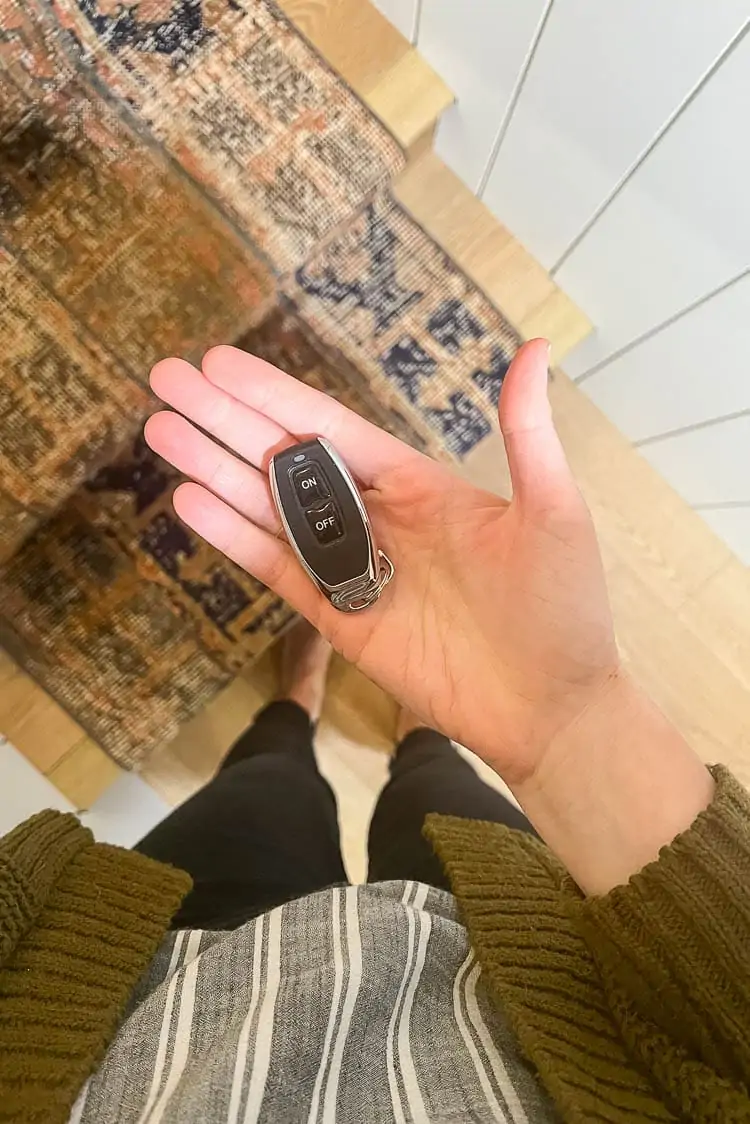
How the Remote Control Latch Works in Daily Life
We keep the remote right on our TV console—easy to grab whenever we need to access storage.
One big question people ask about handle-less hidden doors is: “If there’s no handle, how do you actually grab it when it unlatches?”
When you click the remote, the 12V latch clicks and releases with enough tension to pop the door forward just a fraction of an inch. That slight pop gives you just enough edge clearance to grab the planking and swing it completely open without needing a hidden finger-pull or dummy handle on the outside.
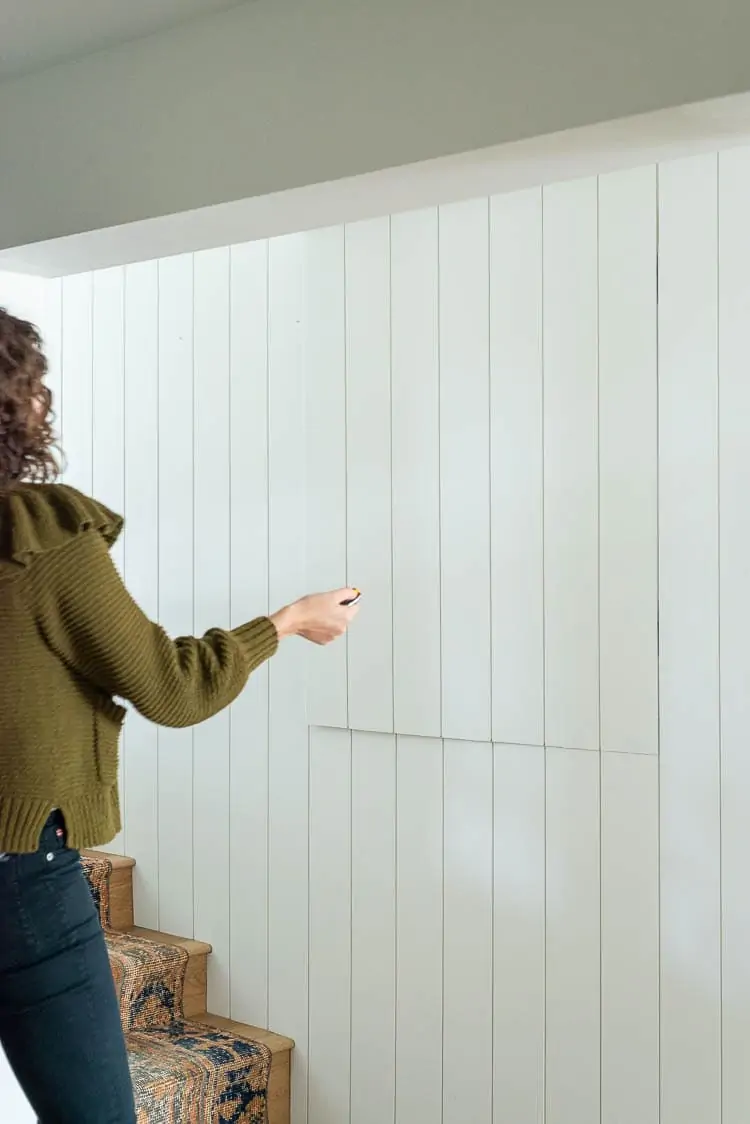
When you are done using the space, you just push the door closed to latch. Easy peasy.
Sneak Peek: The Basement Gallery Wall & Paneling
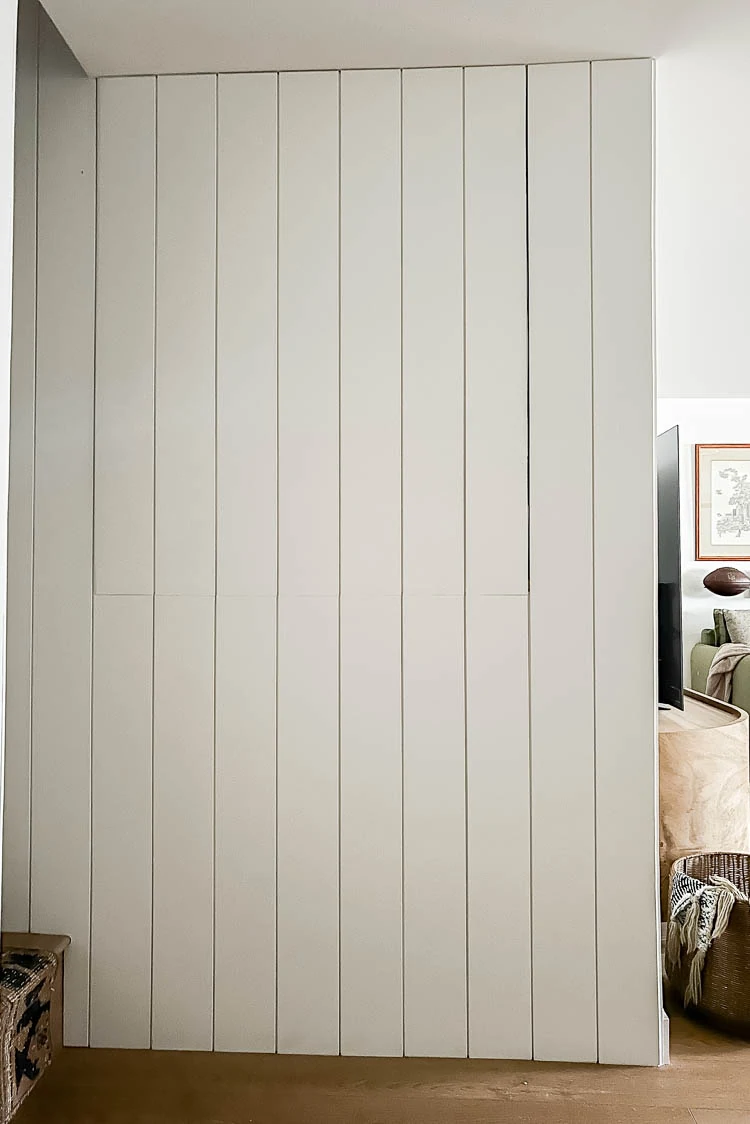
If you are looking for more resources for modern hidden door ideas, etc., I thought this was good article on issues that you might have and price point for hiring a project like this out. Also, if you have a traditional door that you are wanting to turn into a hidden door, Chris Loves Julia has a good tutorial on that!
Since our door sits high up over concrete, it's a bit unusual. It's also weird that it needs to open outwards. The goal of writing this tutorial was to give you ideas for making a hide out room of your own. It was hard to find supplies that would make our secret door work. We spent quite a bit of money trying out different hinges and locks, so take what works out of our project and combine it with other tutorials for your secret passageway.
Overall, installing a hidden door can add both functionality and style to a room. It can provide a discreet entrance to a private space or simply create a unique feature in a home.
When planning to install a hidden door, it is important to consider the size and weight of the door, as well as the available space and the type of wall or floor it will be installed in.
There are a variety of options for hidden door hardware, including hinges, pivots, and sliding mechanisms. Each has its own advantages and disadvantages, so it is important to research and choose the best option for the specific project.
With careful planning and attention to detail, installing a hidden door can be a rewarding and satisfying project! We, are definitely happy with ours!
How to Build a Secret Door (Also called hidden doors or jib doors)
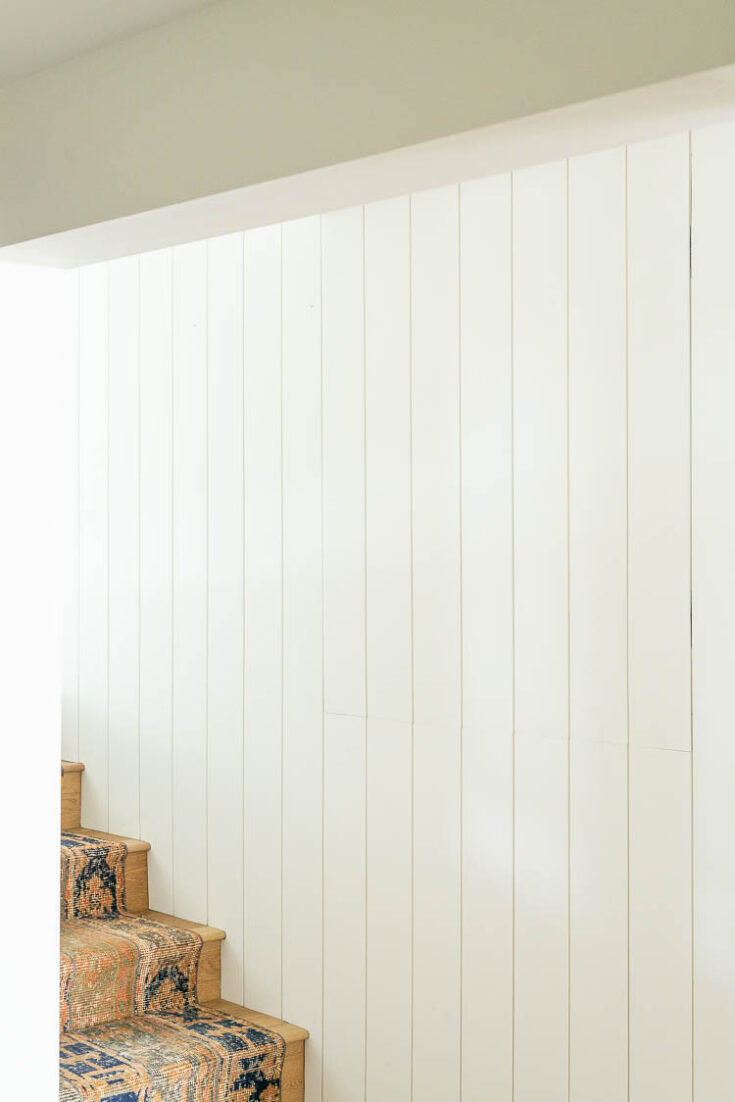
Interested in a secret door? Learn more about how to install a hidden door within a wall in today’s post!
Materials
- 2x4's
- Planking
- SSOS Hidden Hinges
- 2 Latches
- Power Supply
Tools
- Soldering Set
- Drill
- Miter Saw
- Router
- Nail gun
- Air Compressor
Instructions
- Install planking up to door opening (on hinge side of door). We mitered our planking in this step and at the end when we continued to plank.
- Build door (or skip, if you already have one)
- Use SSOS templates to route hinge holes into door
- Place door in opening, and mark hinge holes on frame
- Use SSOS templates to route hinge holes into frame
- Dry-fit hinges and make sure there’s room for planking on door to clear
- Screw hinges into place
- Install, or adjust placement of door stop, to make sure door is flush with wall
- Continue installing planking over door
Happy secret passage building!
}

Christi
So cool!
Ashley Mayes
Thanks Christi! It's fun (and Greyson has loved to use it for hide and seek). =)
Kevin
I’m trying to do a hidden door in an entryway closet. Why didn’t you choose you use the push latches? I too will need this door to swing out passed the wall paneling I have chosen.
Your tutorial was a great help.
Thank you.
Ashley Mayes
Hi Kevin. We did try push latches to start with as they're simple and cheap. We ran into two problems. One, is that push latches don't work as well for heavier doors. Ours is a bit overbuilt and weighs a good amount because of it. The second reason is that push latches need a little give (from where they're closed / flush looking) inward to unlatch. Because of how our shiplap interlocks, there's very little play without making the door look less seamless.
Edith Anne
Did you 45 the shiplap so that the door will open? Trying to do the same but with a baseboard on the door but the miter on the base looks horrible.
Ashley Mayes
We only used a 45 degree cut on the bottom of our door (the top sits pretty flush against the ceiling, so it is hidden). The left and right side of the door have the shiplap overlapping, like shiplap normally does, so no 45s there. These SSOS hinges are meant to be used with two flat pieces of wood butting up to each other (and very little gap between them). They open in a way that gives some extra clearance as the door opens. That said, we did route out the door frame last and attached the hinges to the door to mock up the fit and make sure the door could open and close freely.
Latoya
Ashley, thank you for the tutorial! After reading it I am a bit concerned with the latches I was considering. We are trying to create a jib door in our family room to lead to an office/guest bedroom. I found a door that weights around 60 lbs. and curious the best option for a latch. This project is part of an addition to our 100 year old house. We are working a contractor and he mentioned doing a similar project years ago so fingers crossed. This was super helpful. By the way, we also purchased the SSOS hinges.
Ashley Mayes
We did try some push-to-open latches (like you see on some cabinets) but we couldn't get them to work for us. Because we wanted a really tight fit on the latch side of the door, we didn't have enough play for the door to push in and allow the latch to release. Maybe we were just doing something wrong, but that's why we ended up with a more complicated latch.
Lori
Where did you get the latch and remote?
Ashley Mayes
Hi, It's all linked under the heading,HIDDEN DOOR LATCH SYSTEM FOR OUR SECRET DOOR SET-UP. Thanks!
Wade and Ana
We are building an exact build of this, outward opening door with shiplap for a storage space. I noticed that you routed the template partially in the door jam/frame and also partially into the shiplap itself. That seems less sturdy than I to the wood entirely. Did that compromise the strength of the hinge?
Ashley Mayes
With these hinges, we didn't really have any other option. They come with a template that specifies exactly where in the door and jam they need to be mounted. We planned for the edge of the shiplap to line up exactly with the door frame and then I glued and nailed the shiplap piece to the frame before routing out for the hinges. We were hoping this would be sturdy enough, and so far it's worked great.
Heather Adams
Awesome door. My husband and I have ordered the hinges and latch and are in the process of building our outdoor shed with a hidden door. I have a question...Where did you get your runner carpeting on your basement stairs? Looking forward to your response..
Ashley Mayes
Hi,
The runner is vintage. I buy from Etsy or Ebay. I have a few rug posts that share how I find them.
Spencer
Would you be able to share a picture of the interior of the door? Curious as to what’s behind the shiplap and how you did it.
Ashley Mayes
We left it unfinished because our space didn't require anything other than that. You can see the back of the shiplap and the 2x4 frame in one of the close ups on one hinge. Hope that helps!
Renee
Thank you for sharing! I’m looking to do a very similar project. How did you construct the actual door?
Ashley Mayes
Our situation for the door was a bit weird so I didn't share that. You can see what we did in a few photos though. Basically constructed a square using 2x4's and nailed the front facing boards on it. It's not finished from the inside because it's an unfinished storage space.
Becky Deller
Thank you so much for your tutorial as this was extremely helpful. I am working to build a new wall to conceal a murphy bed in my home office and will have board and batten with a baseboard so hoping we can still make this work. The idea of a remote is brilliant too. Thanks again!
Ashley Mayes
That sounds like a fun project!!! Good luck
Molly Minczeski
hi there! We are working on a secret closet door (actually, french doors). I am using the hinges you recommended but the gap on the hinge side of the door has to be soooo big in order for the door to open fully. How did you remedy that?? The look you achieved is exactly what we are after!!
Sincerely,
A long time BTTTOU follower!
Ashley Mayes
Hi Molly. If you are using the same hinges we did, they should have instructions about how far from the wall the hinges should be installed. In the right location, the gap between the door and the side jamb should be really small. On SOSS's website there's a good, but hard to find, example of what this looks like: https://www.soss.com/wp-content/uploads/product_drawings/cased_jamb_detail.pdf
The hinge will be very close to the surface of the wall.